Choose for the job and the climate
Decide what the hedge is for. A tall screen, a low formal edge, a flowering hedge and a windbreak all need different plants. Think about how tall it should grow and how much trimming you are happy to do.
Common choices in Cyprus gardens include pittosporum, privet, ficus, photinia, cypress, oleander and bougainvillea. Ask what grows well in your area and soil before you buy.
Plant well and water until it is established
Plant in autumn if you can, in a prepared bed with the plants evenly spaced. Water deeply through the first summers, because a young hedge dries out quickly. Mulch the base to keep the roots cool.
A drip line along the hedge gives even water with little waste.
Trim little and often
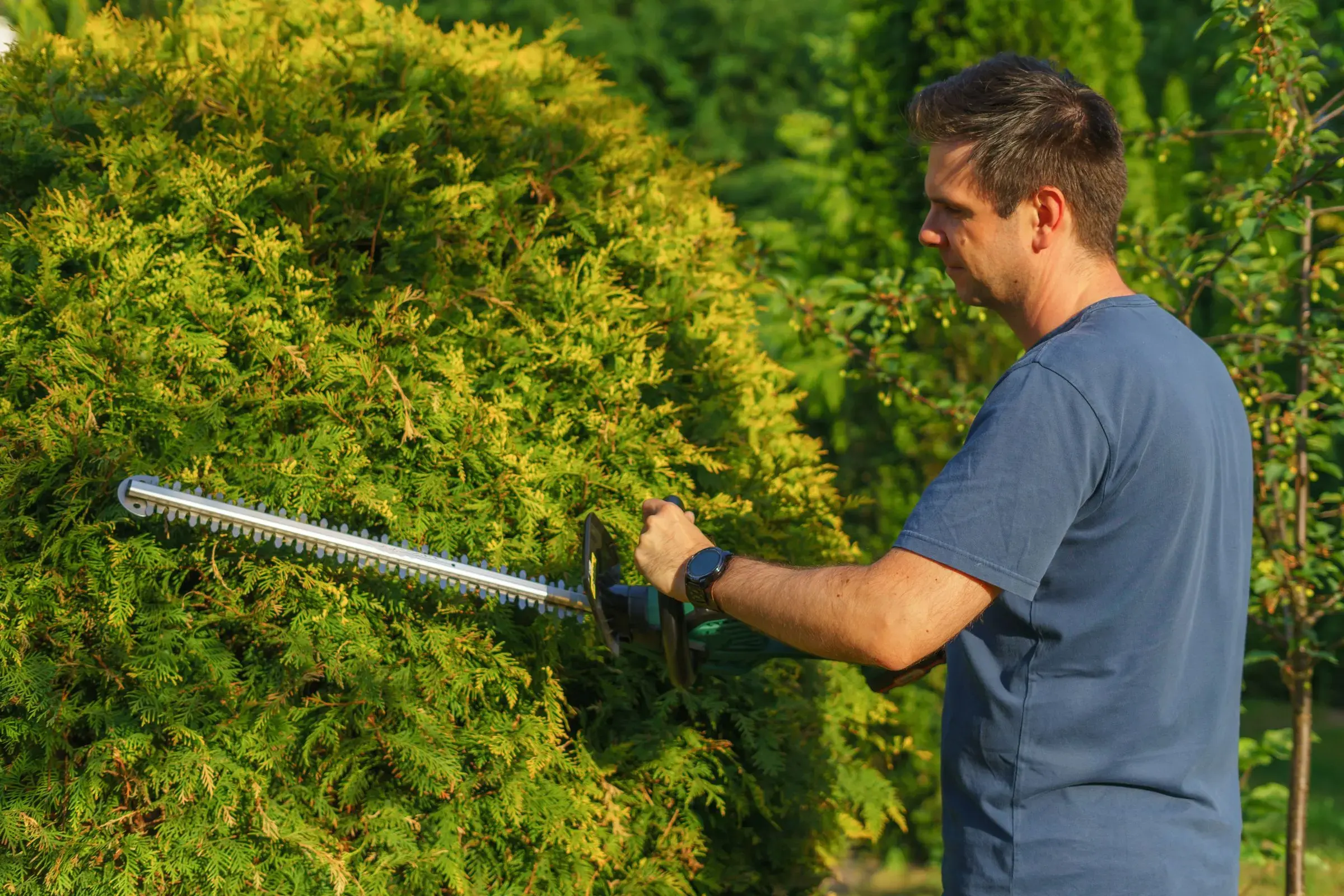
Regular light trimming keeps a hedge dense. Cutting a little every few weeks in the growing season is easier and tidier than a hard cut once a year. Heavy cutting leaves bare patches that can take a long time to fill.
Many hedges grow fast in spring and early summer, so that is when they need the most attention.
Shape it wider at the bottom
Trim the hedge so that it is slightly wider at the base than at the top. This lets light reach the lower branches and keeps the bottom thick and green. A hedge that is wider on top shades itself and goes bare below.
Use sharp tools and a straight guide such as a line. Sharp blades cut cleanly and heal faster.
Avoid the common mistakes
Do not cut conifers into bare wood, as they often do not regrow from it. Avoid heavy trimming in the hottest weeks, when the plant is under stress. Check for nesting birds before cutting in spring.
Clear the cuttings afterwards. A pile of clippings looks untidy and left on a lawn it will damage the grass.