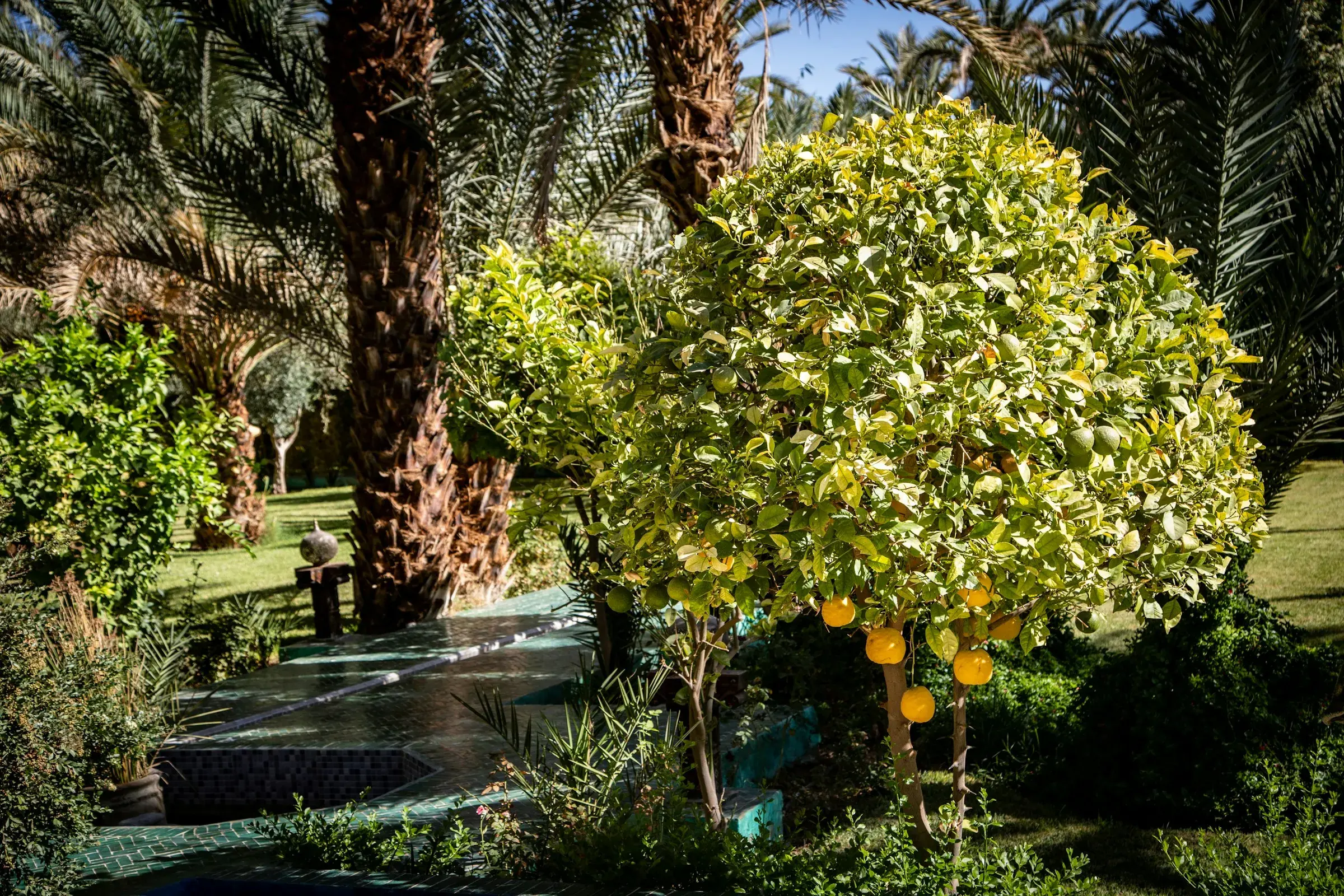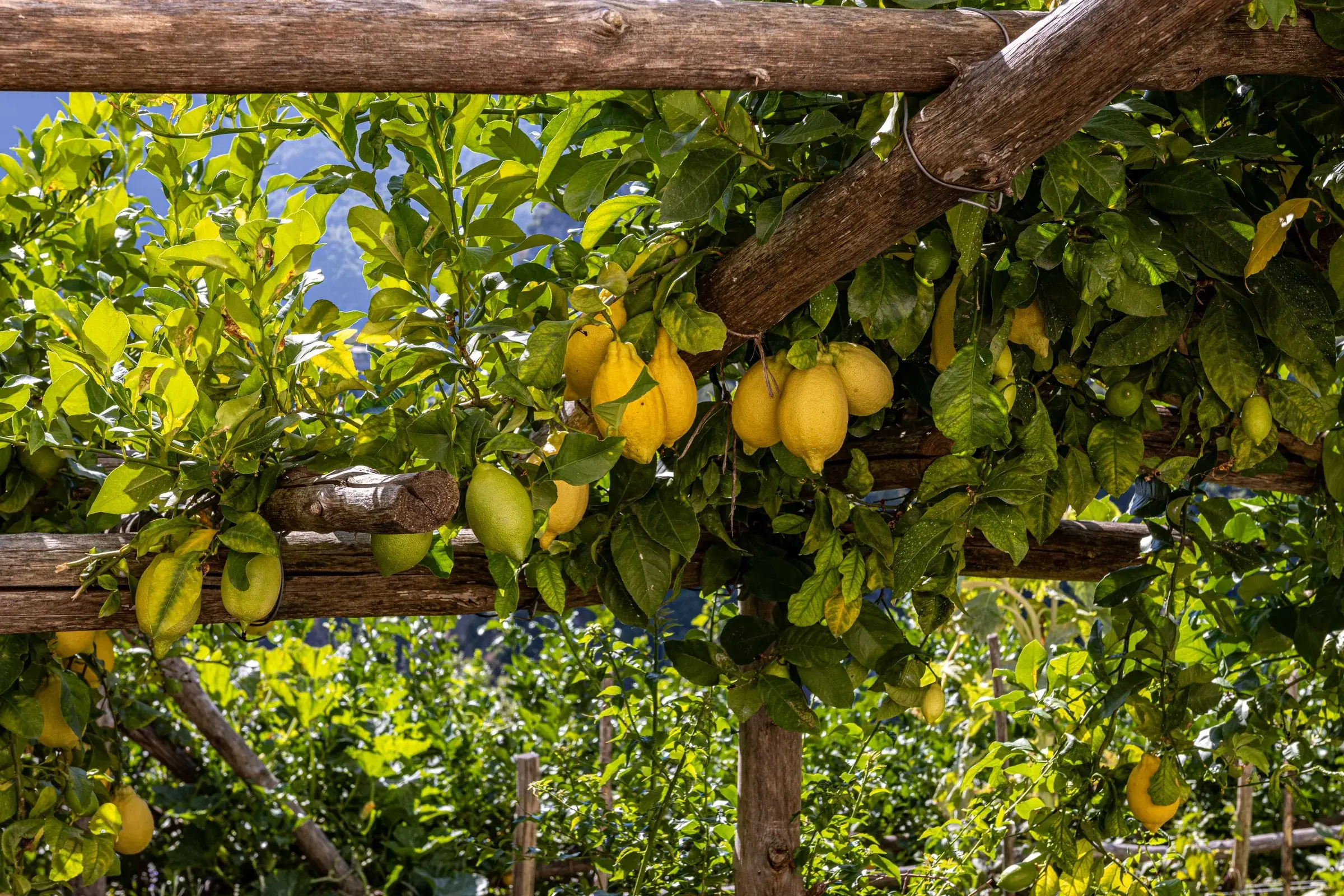
Citrus likes steady water
Citrus trees do not like to swing between drought and flood. Water deeply and regularly through the warm months, rather than a little every day. The water should reach the root zone, which extends well beyond the trunk.
In winter the rain usually does most of the work. Adjust the watering to the weather and to how dry the soil feels a few centimetres down.
Feed in spring
Citrus trees are hungry. A feed made for citrus in spring, and again later in the season if the tree is heavily cropping, helps the tree flower, set fruit and keep dark green leaves.
Spread the feed under the canopy, not against the trunk, and water it in.
What yellow leaves usually mean
Yellow leaves with green veins are often a sign of a lack of iron or other trace elements, which is common in alkaline soil. Yellowing all over can mean too little feed or too much water.
Check the watering first, then the feeding. A citrus feed that includes trace elements often helps. If the tree keeps struggling, ask someone with experience to look at it.
Prune lightly and at the right time
Citrus need little pruning. Remove dead wood, crossing branches and shoots growing from the base, and keep the centre open enough for light and air. Late winter to early spring, after the main harvest, is a sensible time for the light work.
Avoid heavy cutting in summer. Newly exposed bark and fruit can burn in strong sun.
Olive trees are tougher but still need care
Olive trees cope with dry summers very well once established. Give young trees regular water for the first years, then let them settle into a low-water routine with an occasional deep soak in a dry spell.
Prune olives in late winter or early spring to keep an open shape and to remove dead wood and suckers. Open trees get more light and are easier to harvest from.